Doxepin for Sleep (Silenor): How Low-Dose Doxepin Works, Dosage and Side Effects
Low-dose doxepin (Silenor 3 mg and 6 mg) is FDA-approved for insomnia with trouble staying asleep, at a fraction of the antidepressant dose. Here is how it works, how it is taken, what the trials found, its side effects, and how it compares with trazodone.

Silenor is the brand name for low-dose doxepin, a prescription sleep medication from Currax approved by the FDA in 2010 for adults with insomnia who have trouble staying asleep. It comes as 3 mg and 6 mg tablets. Doxepin is an older tricyclic antidepressant, but doxepin for sleep works at a fraction of the antidepressant dose and is thought to act by blocking histamine.
Here is how Silenor works, how it is taken, what the trials found, its side effects, and how it compares with higher-dose doxepin and with trazodone. This is educational information, not medical advice; talk to a licensed clinician before starting or stopping any medication.
Silenor at a glance
| Generic name | Doxepin hydrochloride (low dose) |
|---|---|
| Brand name | Silenor (Currax) |
| Drug class | Tricyclic compound used at low dose; thought to work by blocking histamine H1 receptors |
| FDA approval | March 17, 2010, for insomnia with trouble staying asleep |
| Controlled substance | No |
| Strengths | 3 mg and 6 mg tablets |
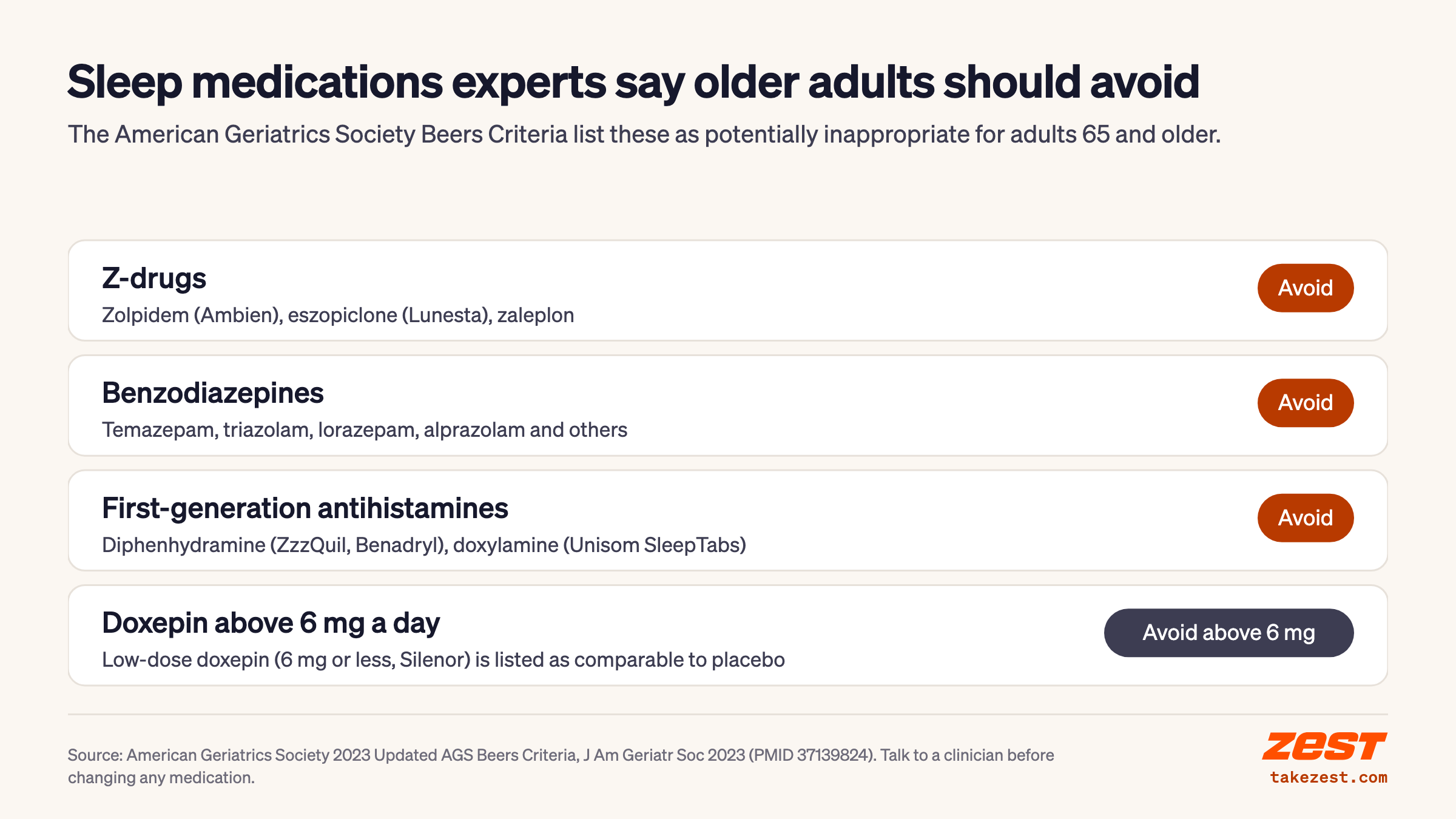
| Usual dose | 6 mg once a night for adults (3 mg may suit some); 3 mg to start for adults 65 and older. Within 30 minutes of bedtime; no more than 6 mg a day. |
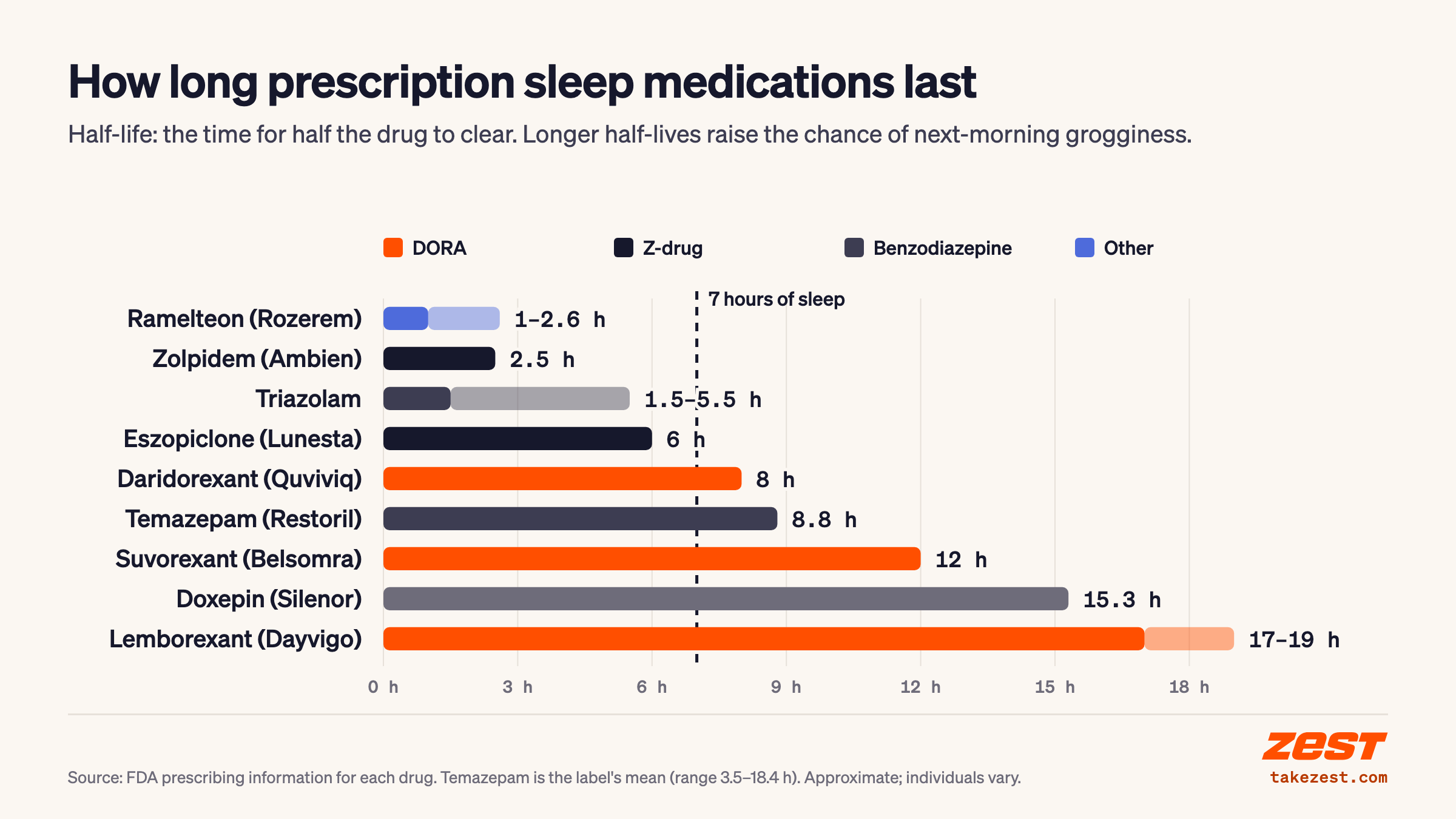
| Half-life | About 15 hours (its active breakdown product, about 31 hours); peak levels about 3.5 hours after a dose |
| Not for | People allergic to doxepin, people taking an MAOI or within two weeks of stopping one, and people with untreated narrow-angle glaucoma or severe urinary retention |
| Generic available | Yes, 3 mg and 6 mg doxepin tablets |
How does doxepin work for sleep?
The FDA label says the way doxepin helps people stay asleep is unclear, but it may work by blocking the H1 histamine receptor. Histamine is one of the brain's wake signals, so blocking it lets sleepiness take over. The label notes that doxepin is an antidepressant at doses 10 to 100 times higher than those in Silenor.
Other sleep medications work differently. Ambien (zolpidem) boosts GABA, the brain's main "brake," and the dual orexin receptor antagonists (DORAs) such as Belsomra block orexin, the signal that keeps you awake. Over-the-counter diphenhydramine is also an antihistamine, but it is a different drug with a different label; see our guide to antihistamine sleep aids.
How to take Silenor (dosage)
- The FDA label's recommended dose for adults is 6 mg once a night. A 3 mg dose may be appropriate for some people.
- For adults 65 and older, the starting dose is 3 mg, which can be raised to 6 mg if needed.
- Take it within 30 minutes of bedtime. The total should not exceed 6 mg a day.
- Do not take it within 3 hours of a meal. Food delays its effect by about 3 hours and raises the chance of next-day effects.
- Cimetidine doubles doxepin levels, and the label caps the dose at 3 mg with it. Other drugs that block the CYP2C19 or CYP2D6 liver enzymes can also raise levels. Tell your prescriber everything you take.
- Do not drink alcohol with it, and be careful combining it with other sedatives or sedating antihistamines.
Does doxepin work? What the trials found
In a 35-day sleep lab trial of 221 adults with chronic insomnia, published in Sleep in 2011, both 3 mg and 6 mg improved time awake after falling asleep and total sleep time compared with placebo. Sleep in the last quarter of the night, a measure of early waking, also improved at nearly every check. The researchers found no significant next-day effects and no rebound insomnia after stopping.
In a 12-week trial of 240 adults 65 and older, published in 2010, 3 mg improved time awake during the night, total sleep time and sleep efficiency compared with placebo, and the gains held at week 12. Discontinuation rates were low, and there were no significant next-day effects.
The American Academy of Sleep Medicine's 2017 guideline suggests doxepin as a treatment for trouble staying asleep in adults. It is a weak recommendation, meaning lower certainty, which the guideline also gives to the other medications it suggests.
Doxepin side effects
In the label's longer placebo-controlled trials, the most common side effect was sleepiness:
| Side effect | Placebo | Silenor 3 mg | Silenor 6 mg |
|---|---|---|---|
| Sleepiness or sedation | 4% | 6% | 9% |
| Upper respiratory infection | 2% | 4% | 2% |
| Nausea | 1% | 2% | 2% |
| High blood pressure | 0% | 3% | Under 1% |
Silenor has no boxed warning, but its label lists these warnings:
- Complex sleep behaviors such as sleep-driving, with no memory of it. The label says to strongly consider stopping if this happens.
- Worsening depression or suicidal thoughts. Antidepressants raise that risk in children and young adults, and the label says the risk from Silenor's low dose cannot be ruled out.
- Next-day impairment: after taking it, stick to getting ready for bed, and be cautious about driving the next day.
- It is ordinarily not recommended for severe sleep apnea.
- If insomnia lasts beyond 7 to 10 days of treatment, the label says you should be re-evaluated for another cause.
Stop and call your clinician if you notice any of the serious effects.
Doxepin 3 mg and 6 mg vs. higher-dose doxepin
| Silenor (3 or 6 mg tablets) | Doxepin capsules | |
|---|---|---|
| FDA-approved for | Insomnia with trouble staying asleep | Major depressive disorder in adults |
| Usual dose | 3 to 6 mg at bedtime | 75 to 150 mg a day |
| Boxed warning | None | Suicidal thoughts and behaviors in young people |
| Half-life | About 15 hours | 8 to 24 hours (mean 17) |
Same molecule, very different dose and purpose. Don't switch products or doses without your prescriber.
Doxepin vs. trazodone for sleep
| Low-dose doxepin (Silenor) | Trazodone | |
|---|---|---|
| FDA-approved for sleep | Yes, trouble staying asleep | No (approved for depression; sleep use is off-label) |
| Controlled substance | No | No |
| Boxed warning | None | Suicidal thoughts and behaviors in young people |
| AASM 2017 guideline for insomnia | Suggests using for staying asleep (weak) | Suggests not using (weak) |
| Generic available | Yes | Yes |
Neither is controlled, and both drugs are also used as antidepressants, but only low-dose doxepin has an FDA sleep indication. See our guide to trazodone for sleep, and for a different approach, our guide to Belsomra (suvorexant).
How to get doxepin prescribed
Silenor and generic low-dose doxepin need a prescription from a licensed clinician after an evaluation of your sleep, health and medications. Good sleep habits and cognitive behavioral therapy for insomnia (CBT-I) remain the first step; medication works best alongside them.
Zest RX for sleep. Zest is preparing to launch telehealth for sleep, connecting you with licensed providers who can evaluate whether a prescription option fits your needs. Join Zest RX early access.
Frequently asked questions
Is doxepin a controlled substance?
No. The Silenor label states that doxepin is not a controlled substance, and that it is not associated with abuse potential in animals or humans. Ambien and Belsomra, by contrast, are Schedule IV.
What is the difference between doxepin 3 mg and 6 mg?
The FDA label recommends 6 mg for most adults and 3 mg as the starting dose for people 65 and older. In trials, sleepiness was slightly more common at 6 mg (9%) than at 3 mg (6%).
Is there a generic for Silenor?
Yes. The FDA has approved several generic doxepin tablets in 3 mg and 6 mg strengths. They are separate from the higher-strength doxepin capsules used for depression.
How long does doxepin stay in your system?
The Silenor label gives a half-life of about 15 hours for doxepin and about 31 hours for its active breakdown product. Taking it with food slows it and raises the chance of next-day effects.
Can you take doxepin with alcohol?
No. The label says not to drink alcohol with Silenor, because alcohol can strengthen its sedative effects. Alcohol also raises the risk of complex sleep behaviors such as sleep-driving.
Is doxepin addictive?
The label reports no withdrawal syndrome after stopping long-term use and says doxepin does not appear to cause physical dependence. Trials found no rebound insomnia. Your prescriber should still watch for any misuse.
Sources
- SILENOR (doxepin) tablets prescribing information, Currax. DailyMed
- Krystal AD, et al. Efficacy and safety of doxepin 3 and 6 mg in a 35-day sleep laboratory trial in adults with chronic primary insomnia. Sleep. 2011;34(10):1433-1442. PubMed
- Krystal AD, et al. Efficacy and Safety of Doxepin 1 mg and 3 mg in a 12-week Sleep Laboratory and Outpatient Trial of Elderly Subjects with Chronic Primary Insomnia. Sleep. 2010;33(11):1553-1561. PubMed
- Sateia MJ, et al. Clinical Practice Guideline for the Pharmacologic Treatment of Chronic Insomnia in Adults: An American Academy of Sleep Medicine Clinical Practice Guideline. J Clin Sleep Med. 2017;13(2):307-349. PubMed
- Doxepin hydrochloride capsules prescribing information, Mylan. DailyMed